


Learning objectives can be used beyond the classroom for other talent development purposes.
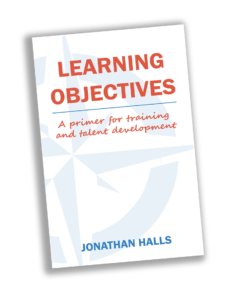
Learning objectives may have started in the classroom, but their real power lies in how they describe workplace performance. Jonathan Halls explores in this briefing how today’s talent professionals can take this simple tool originally designed for the classroom and use its power to have greater impact across the talent development ecosystem.
Learning objectives are often associated with classrooms, e‑learning modules, and formal training programs, which makes it easy to see them purely as instructional tools. However, learning objectives have real utility beyond the traditional learning context. In today’s demanding and fast‑changing workplace, they can help talent professionals deepen their impact, strengthen alignment, and build credibility.
At their core, learning objectives describe tasks — the real work people must perform. And because tasks sit at the heart of performance, and performance sits at the heart of organizational success, learning objectives have the potential to influence far more than training design. They become powerful capability tools that support the entire talent development ecosystem.
Learning Objectives Describe Real Work
In the training field, we traditionally define learning objectives as “tasks people perform after a learning experience.” That definition is fine, but it risks framing objectives as tools meant only for the learning event itself rather than as descriptions of the actual work being performed.
When we step back and consider what learning objectives actually describe, their scope becomes much broader. They describe workplace tasks — the actions, decisions, and behaviors required for successful performance. When we look at them this way, their usefulness expands dramatically. They can just as easily describe:
- tasks people are being coached on
- tasks people need to master to progress in their career
- tasks that define readiness for future roles
- tasks that clarify expectations from day one
In other words, learning objectives are not just instructional tools. They are performance tools.
 Clarity and Concreteness Drive Capability
The more clearly and concretely we define workplace tasks, the more valuable they become for supporting performance across the organization. Well‑written learning objectives articulate tasks in observable, measurable terms, offering a shared language for performance. They make capability visible. And when capability becomes visible, organizations can grow it with purpose.
This clarity is especially important in a workplace where roles evolve quickly, responsibilities shift, and expectations change. Without a clear description of the work, it becomes difficult to coach, develop, or evaluate performance in a meaningful way. Learning objectives solve that problem.
A Strategic Tool Across the Talent Ecosystem
Once we understand learning objectives as descriptions of real work, their relevance extends far beyond training. They become a unifying thread across the entire talent ecosystem. For example:
Performance Coaching – Coaching becomes more grounded when it focuses on observable tasks rather than subjective impressions. Instead of aiming for vague goals like “be more proactive,” a coach can use the structure of a learning objective to define a tangible target — for example, “identify emerging risks in market changes before they impact delivery.” This gives both the coach and the employee clarity and a standard for feedback.
Performance Management – Performance management often struggles to frame expectations clearly and apply them consistently. Using learning objectives shifts the conversation from opinion to evidence. They define the standard of performance in concrete terms, making evaluations more fair, transparent, and actionable.
Career Planning – Career conversations can be notoriously vague — “I want to lead,” “I want to grow,” “I want to move up.” Learning objectives crystallize those aspirations into concrete outcomes. They help employees and their mentors identify the tasks required for career progress, map a clear path, and give supervisors clarity on how to support development.
Succession Planning – Succession planning becomes more reliable when readiness is defined by real work. Learning objectives articulate the tasks required for future roles, making development pathways more concrete and reducing the guesswork around who is prepared for what.
Recruitment and Selection – Hiring improves when expectations are defined as tasks from day one. Instead of generic job descriptions, learning objectives clarify the actual work candidates must be able to perform. This leads to better alignment, better interviews, and better hiring decisions.
A Tool for a Changing Workplace
The modern workplace demands agility, clarity, and alignment. Roles evolve quickly. Skills become outdated. Expectations shift. In this environment, organizations need a simple, reliable way to describe the work people must do.
Learning objectives provide that clarity because they were designed for workplace performance. They describe the action required to perform a task, the conditions under which it is performed, and the standard to which it must be done. They can be used across all talent functions and incorporated into organizational task frameworks that influence talent strategy.
Treating learning objectives as a strategic tool — not just a training tool — unlocks their full potential. They help organizations coach more effectively, manage performance more fairly, plan careers more intentionally, and build capability with purpose.
Yes, learning objectives may have started as an instructional tool, but their power extends well beyond the classroom.




Comments are closed.